Woah.
Okay, let me explain. About a month ago, as my wife and I slept, a crashing sound woke us. It had stormed all day (the same storm that rocked Alabama), so we assumed it was thunder. But then my wife says, "Why does it sound like it's raining inside of our house?" Walking into the living room, I saw that about a third of the kitchen ceiling had caved in and water poured all over our kitchen table.
Goodbye Bibles, goodbye prayer journal. Blurg.
As I stared into the kitchen chaos, the living room ceiling fell. For a moment, both my wife and I thought that maybe the big tree in our backyard had crashed through the roof. It was that loud.
And so began the craziest month I've had since moving to Nashville. We lost some stuff. We had to move out of our home and find a new place to live. We slept on futons and air mattresses in our friend's spare rooms. We daydreamt about having our own kitchen and some time alone.
Now, I've learned plenty about God in the midst of this ordeal, but I want to hear from you (it's been so long, right?) before I jump into a homily. Have any of you gone through crazy stuff like this and wondered if God was sleeping on the clock or had in some anti-septic religious sentiment decided you were too happy and needed a stiff dose of Old Testament suffering?
Have you looked up and asked "what the hell? Why me?"
It's okay. This is a safe place. You can be honest.
As a bonus, I'd like for you to hear a song I wrote before my home disaster, monstrous tornadoes in the south and midwest, or people recently expecting the rapture.
History Lesson at the End of the World by The Summer Country
Monday, May 30, 2011

Thursday, April 21, 2011
Sparrows and Lillies, Insurance and Silverchair - A question on living out our trust in God.
The 90's had better radio rock than any other decade in America. I'll suffer no discussion on this. It's just the plain truth. I love 90's radio rock so much that I've told my wife I'd like to name a daughter Seattle.
But who would have known, who could have known, one of the best 90's radio rock albums would come from a trio of 15-year-old kids in the middle-of-no-place Australia? That's right. I'm talking about Silverchair and their hurricane debut album Frogstomp. Even if the rest of the album sounded like a dry fart, you have to love the song Tomorrow.
Now, I bring this up for one tiny, seemingly unconnected reason. The opening line in the second verse says, "You say money isn't everything. Well I'd like to see you live without it." And there I see a point of tension with a lot of people in the church.
In Matthew 6:25-34, Jesus tells people not to worry about stuff like food and clothing. Several people walk away from Him disheartened by the cost of following Him (as in Mark 10:17-22 and Luke 9:22-24). But does that mean we really give away everything? Give up the security of money, family, and career? Consider the possibility of homelessness, persecution, and death?
If not, why not? Where does Jesus tell us to hedge our bets?
Yes, Proverbs does tell people to make plans, and Paul does tell Timothy how men should work to provide for their families. My problem comes from the attitude culture fosters in us. "God provides, but just in case, there's UnitedHealth."
While writing this, a guy at my wife's coffee shop asked me to talk with him about God. Within two minutes he tells me how he needs to pay his landlord a certain amount of money by 9:00pm or else she would throw him out. As I'm talking with this guy, I tell him what I can do for him. Then I say, "But I really think we should pray. I've seen God answer prayer over and over again when it comes to this sort of thing." And then the guy got mad. He says, "I don't need prayer, I need to pay my rent!"
Before you or I go tsk-tsking this guy, let's be honest. We've all felt that way in very desperate moments. Haven't we all at one point reacted just like him? We know we need God, but in the middle of a crisis we want the material means to alleviate the situation first.
Just so you know, the man did let me pray for him. Within twenty minutes, I worked out a solution with his landlord and the guy got two phone calls for odd jobs. Without looking me in the eye, the guy mumbled, "Maybe that prayer did work." Ha.
Maybe you don't think you would react like that guy. If so, let me ask you this: What if you somehow lost your health insurance? What if you had an emergency that your insurance wouldn't cover? What if it affected your wife or kids? Would you pray, trusting God to take care of you? Or would you honestly wonder if a good God could allow such a thing to happen to you and your loved ones? How would you feel if someone said, "Let me pray for you" when you had 24 hours before the end of your known universe? Is it wrong to say we worship what or who we trust most?
I'm not saying insurance itself is evil (although I can't give the same confidence to insurance companies), but I do think we should consider our heart in light of what we find in the Bible.
What kind of attitude do you think Christians should have?
But who would have known, who could have known, one of the best 90's radio rock albums would come from a trio of 15-year-old kids in the middle-of-no-place Australia? That's right. I'm talking about Silverchair and their hurricane debut album Frogstomp. Even if the rest of the album sounded like a dry fart, you have to love the song Tomorrow.
Now, I bring this up for one tiny, seemingly unconnected reason. The opening line in the second verse says, "You say money isn't everything. Well I'd like to see you live without it." And there I see a point of tension with a lot of people in the church.
In Matthew 6:25-34, Jesus tells people not to worry about stuff like food and clothing. Several people walk away from Him disheartened by the cost of following Him (as in Mark 10:17-22 and Luke 9:22-24). But does that mean we really give away everything? Give up the security of money, family, and career? Consider the possibility of homelessness, persecution, and death?
If not, why not? Where does Jesus tell us to hedge our bets?
Yes, Proverbs does tell people to make plans, and Paul does tell Timothy how men should work to provide for their families. My problem comes from the attitude culture fosters in us. "God provides, but just in case, there's UnitedHealth."
While writing this, a guy at my wife's coffee shop asked me to talk with him about God. Within two minutes he tells me how he needs to pay his landlord a certain amount of money by 9:00pm or else she would throw him out. As I'm talking with this guy, I tell him what I can do for him. Then I say, "But I really think we should pray. I've seen God answer prayer over and over again when it comes to this sort of thing." And then the guy got mad. He says, "I don't need prayer, I need to pay my rent!"
Before you or I go tsk-tsking this guy, let's be honest. We've all felt that way in very desperate moments. Haven't we all at one point reacted just like him? We know we need God, but in the middle of a crisis we want the material means to alleviate the situation first.
Just so you know, the man did let me pray for him. Within twenty minutes, I worked out a solution with his landlord and the guy got two phone calls for odd jobs. Without looking me in the eye, the guy mumbled, "Maybe that prayer did work." Ha.
Maybe you don't think you would react like that guy. If so, let me ask you this: What if you somehow lost your health insurance? What if you had an emergency that your insurance wouldn't cover? What if it affected your wife or kids? Would you pray, trusting God to take care of you? Or would you honestly wonder if a good God could allow such a thing to happen to you and your loved ones? How would you feel if someone said, "Let me pray for you" when you had 24 hours before the end of your known universe? Is it wrong to say we worship what or who we trust most?
I'm not saying insurance itself is evil (although I can't give the same confidence to insurance companies), but I do think we should consider our heart in light of what we find in the Bible.
What kind of attitude do you think Christians should have?
Sunday, April 10, 2011
The Purpose Of Doctrine Is Not Doctrine Itself.
For those of you who read Stark Raving Obedience or maybe the first post in the Press, you may remember how I compared my relationship with God to joining the Rachel Leigh Cook fan club.
This morning, I heard pastor John Privett say something similar in his message. "It's one thing to know about a person but another to actually know them. Some people try to substitute the Bible for a dynamic, active relationship with Jesus."
At one point in time, I felt like I knew quite a lot about Rachel Leigh Cook, but I didn't know her. In fact, I sometimes think of how I could have only hung out with her if she initiated it. It's sort of like how Jesus told His disciples, "You didn't choose me, I chose you." But that's beside my point here.
I realize that I've put a lot of focus on the Bible lately. I've done so because people seem to have a lot of questions and want to talk about it. A Charles Spurgeon quote comes to mind today, "Defend the Bible? I would just as soon defend a lion. Just turn the Bible loose. It will defend itself." Like Spurgeon, I don't feel like I need to defend the Bible. If you want to wrestle with it, you'll find it hard to overpower.
I mentioned having a point earlier, so here it is. I wrote about this stuff because I want to encourage you to have a dynamic relationship with Jesus. I think knowing doctrine allows this, which may explain why Paul told both Timothy to be nourished on sound doctrine (1 Tim. 4:6) and Titus to hold fast to the Word so he can teach sound doctrine. Now, the purpose of doctrine is not doctrine itself, but to explain how a person can know, love, and have a relationship with God in the way He wants. But it's the very fact of God wanting things on His terms which (I think) scares people most. G.K. Chesterton once wrote "The Christian ideal has not been tried and found wanting; it has been found difficult and left untried."
What do you think? Would you rather know and love God on His terms? How would a person even know such a thing?
Does Jesus, or even the mention of Jesus, make you nervous?
Does the Holy Spirit scare you, even though He's offering gifts?
How important is your control to you?
This morning, I heard pastor John Privett say something similar in his message. "It's one thing to know about a person but another to actually know them. Some people try to substitute the Bible for a dynamic, active relationship with Jesus."
At one point in time, I felt like I knew quite a lot about Rachel Leigh Cook, but I didn't know her. In fact, I sometimes think of how I could have only hung out with her if she initiated it. It's sort of like how Jesus told His disciples, "You didn't choose me, I chose you." But that's beside my point here.
I realize that I've put a lot of focus on the Bible lately. I've done so because people seem to have a lot of questions and want to talk about it. A Charles Spurgeon quote comes to mind today, "Defend the Bible? I would just as soon defend a lion. Just turn the Bible loose. It will defend itself." Like Spurgeon, I don't feel like I need to defend the Bible. If you want to wrestle with it, you'll find it hard to overpower.
I mentioned having a point earlier, so here it is. I wrote about this stuff because I want to encourage you to have a dynamic relationship with Jesus. I think knowing doctrine allows this, which may explain why Paul told both Timothy to be nourished on sound doctrine (1 Tim. 4:6) and Titus to hold fast to the Word so he can teach sound doctrine. Now, the purpose of doctrine is not doctrine itself, but to explain how a person can know, love, and have a relationship with God in the way He wants. But it's the very fact of God wanting things on His terms which (I think) scares people most. G.K. Chesterton once wrote "The Christian ideal has not been tried and found wanting; it has been found difficult and left untried."
What do you think? Would you rather know and love God on His terms? How would a person even know such a thing?
Does Jesus, or even the mention of Jesus, make you nervous?
Does the Holy Spirit scare you, even though He's offering gifts?
How important is your control to you?
Sunday, April 3, 2011
One Possible Reason Why People Don't Want To Believe in Scriptural Authority and Inerrancy.
God bless my parents for reading books. Not just because it fostered in me a love for the written word, not just because reading leads to understanding more of how people behave, feel, and think, but because reading made my parents good teachers. Both of my parents teach inside and outside of the church, so throughout my life I would hear them quote from the books piled up on the sofa end table. I made this connection early, "Reading makes you smart. Smart enough to tell other people stuff they don't know. Stuff they want to know. And when you know stuff they want to know, they'll listen to you. They'll like you." And of course, most of our lives are spent trying to get people to like us...
But really, I'm glad my parents read because I could never buy all of those books on my own. Every time I visit Michigan, some of their books vanish while others mysteriously reappear where mom kept looking all those months. During one visit, I thumbed through a book called "A Third Testament" by Malcolm Muggeridge. He covered writings from several respected Christian authors and gave it this hilariously exaggerated title. I wonder what Lewis or Bonhoeffer would have thought about it...
But I'm getting off topic, and Sarah won't read anything too long on here. The point is, I think my mom bought the book because it contained selected writings of Soren Kierkegaard. That guy wrote more in his life than most people read, so I can understand why mom wanted bite-sized portions. Admittedly, the only Kierkegaard I know I first heard from a Swedish girl commenting on Jon Acuff's Blog. But seriously guys, read this slowly, openly, and questioningly:
"The matter is quite simple. The Bible is very easy to understand. But we Christians are a bunch of scheming swindlers. We pretend to be unable to understand it because we know very well that the minute we understand, we are obligated to act accordingly. Take any words in the New Testament and forget everything except pledging yourself to act accordingly. My God, you will say, if I do that my whole life will be ruined. How would I ever get on in the world?
"Herein lies the real place of Christian scholarship. Christian scholarship is the Church's prodigious invention to defend itself against the Bible, to ensure that we can continue to be good Christians without the Bible coming too close."
It's almost disheartening to think about how true those words are, isn't it? So I wonder, does the underlying motivation of Christians to deny Biblical authority and inerrancy come from the fear Kierkegaard describes? What does that say about us as Christians if we tell people, "Read the Bible, but don't take it too seriously"?
But really, I'm glad my parents read because I could never buy all of those books on my own. Every time I visit Michigan, some of their books vanish while others mysteriously reappear where mom kept looking all those months. During one visit, I thumbed through a book called "A Third Testament" by Malcolm Muggeridge. He covered writings from several respected Christian authors and gave it this hilariously exaggerated title. I wonder what Lewis or Bonhoeffer would have thought about it...
But I'm getting off topic, and Sarah won't read anything too long on here. The point is, I think my mom bought the book because it contained selected writings of Soren Kierkegaard. That guy wrote more in his life than most people read, so I can understand why mom wanted bite-sized portions. Admittedly, the only Kierkegaard I know I first heard from a Swedish girl commenting on Jon Acuff's Blog. But seriously guys, read this slowly, openly, and questioningly:
"The matter is quite simple. The Bible is very easy to understand. But we Christians are a bunch of scheming swindlers. We pretend to be unable to understand it because we know very well that the minute we understand, we are obligated to act accordingly. Take any words in the New Testament and forget everything except pledging yourself to act accordingly. My God, you will say, if I do that my whole life will be ruined. How would I ever get on in the world?
"Herein lies the real place of Christian scholarship. Christian scholarship is the Church's prodigious invention to defend itself against the Bible, to ensure that we can continue to be good Christians without the Bible coming too close."
It's almost disheartening to think about how true those words are, isn't it? So I wonder, does the underlying motivation of Christians to deny Biblical authority and inerrancy come from the fear Kierkegaard describes? What does that say about us as Christians if we tell people, "Read the Bible, but don't take it too seriously"?
Tuesday, March 29, 2011
"Where Did Sin Come From?" - Part one (?) of Questions From the Lifehouse Youth Group
My wife and I help lead the youth group at Lifehouse Church. I've been doing this for about two and half years, Chelsea joining soon after we started dating. For a long time, the group only had five youths, three of them siblings. We played games and went on trips and studied cool books like Crazy Love , but nothing seemed to spark real excitement in the group. Then we began studying Wayne Grudem's Bible Doctrine
 . By this time, our church moved into two locations and we met a few teenagers from the Spring Hill area. Then our youth group more than doubled.
I mean, twelve teens might not seem like a lot to the seasoned youth group leader, but for us, it was a little dizzying.
I don't know if I can credit this all to the church now having a location in Spring Hill or if it's because we're digging into questions regarding deep truth, but the conversations during meetings have changed dramatically. We're discussing Common Grace, Sin, Prayer, the Trinity, the Gospel, and the like. And I'm learning something from them about how I lead a discussion. First of all, nothing makes you feel so much like a dope when you ask a question and hear silence from a room full of teens. But instead of accusing them of disinterest, I try to figure out ways to ask questions about the topic so they want to answer.
It's one big reason why I've changed how I do things on this weblog. Not that you're a bunch of teenagers.
The kids also teach me how to ask good questions by, well, asking me good questions. During our discussion on Sin, one of the girls asked, "But where did sin come from?"
How beautifully simple. So I said, "From rules." Only after I said it did I think about it. Paul seems to say as much on his explanation of sin in Romans. Sin didn't exist on earth until God told Adam and Eve "Don't eat that fruit." That's not to say I think God gave men sin by giving them a rule. I mean to say that God created men with a will that would sin. The Fall may have easily happened if God said, "make sure to eat that fruit every day" because the serpent might have countered with, "Aren't you a little full?" and we'd be in the same mess.
I may be wrong. I may be only partially right. But where do you think sin came from? Do you even think sin is real (I'm looking at you, relativist reader)?
, but nothing seemed to spark real excitement in the group. Then we began studying Wayne Grudem's Bible Doctrine. By this time, our church moved into two locations and we met a few teenagers from the Spring Hill area. Then our youth group more than doubled.I mean, twelve teens might not seem like a lot to the seasoned youth group leader, but for us, it was a little dizzying.
I don't know if I can credit this all to the church now having a location in Spring Hill or if it's because we're digging into questions regarding deep truth, but the conversations during meetings have changed dramatically. We're discussing Common Grace, Sin, Prayer, the Trinity, the Gospel, and the like. And I'm learning something from them about how I lead a discussion. First of all, nothing makes you feel so much like a dope when you ask a question and hear silence from a room full of teens. But instead of accusing them of disinterest, I try to figure out ways to ask questions about the topic so they want to answer.
It's one big reason why I've changed how I do things on this weblog. Not that you're a bunch of teenagers.
The kids also teach me how to ask good questions by, well, asking me good questions. During our discussion on Sin, one of the girls asked, "But where did sin come from?"
How beautifully simple. So I said, "From rules." Only after I said it did I think about it. Paul seems to say as much on his explanation of sin in Romans. Sin didn't exist on earth until God told Adam and Eve "Don't eat that fruit." That's not to say I think God gave men sin by giving them a rule. I mean to say that God created men with a will that would sin. The Fall may have easily happened if God said, "make sure to eat that fruit every day" because the serpent might have countered with, "Aren't you a little full?" and we'd be in the same mess.
I may be wrong. I may be only partially right. But where do you think sin came from? Do you even think sin is real (I'm looking at you, relativist reader)?
Saturday, March 26, 2011
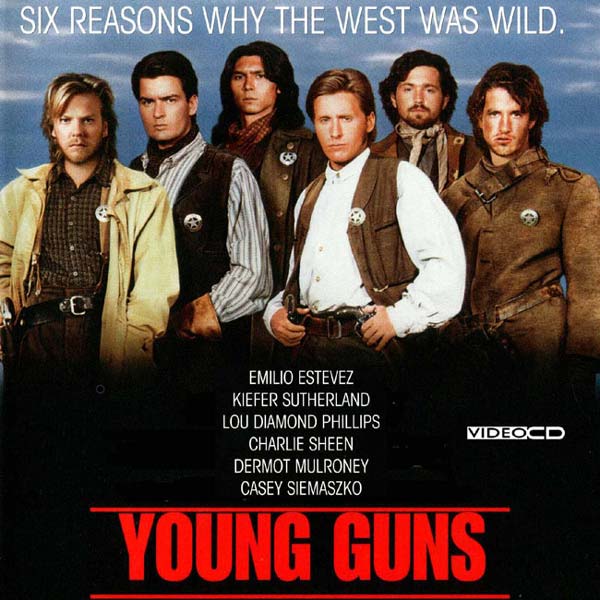
Old Guard vs. Young Guns - Two Ways For Believers To Look At Things Like Biblical Authority, Revelation, And The Church.
Before writing my last post, I told my wife, "I think I'm going to poke a hornet nest and talk about biblical authority again." Lots of people seemed to have read the post, even though Matt and William became the voices for what I think are the two major camps within the Western church. The Old Guard and the Young Guns.
I used to pride myself in my religious angst. At times, it was justified, like when a high school classmate told me, "You know, maybe you're not doing so well in Algebra because of that music you listen to." And other times, I think I wanted to see holes in the church, holes in the Bible, and "elasticity" to Christianity because it allowed me to justify almost anything. What can I say? My argumentative style is persuasion.
Even though I agree more with William's comments, I think I know Matt's point of view. I tried my best to grind an axe with the Bible, "institutional church," and every aspect of Christianity all the while calling myself a Christian and claiming to follow God. In hindsight, I think I was fighting God kind of like Doug in this sketch (not that I think it's a perfect example. Sorry if you think it's a little blue, but I hope you get the idea). I think I wanted my friends outside of the church to think I was savvy like the Young Guns and not judgmental like the musty, dusty, Bible-thumping Old Guard.
I used to say that human writers and translation errors made the Bible untrustworthy as a perfect book.
I used to say that I trusted the guidance of the Holy Spirit more than the Bible.
I used to say that every Christian was a part of the church, so why couldn't I call a group of believers in my living room "church"?
I gave up that kind of thinking when I realized this: I'm an idiot. I have a serious pride issue when I think I'm the wisest dude in the room.
If God wanted to explain Himself and His ways to men in a way they can understand, wouldn't He have some awareness of human folly and short-comings? If God allowed men to insert anything into the scriptures apart from His perfect truth, doesn't that mean the book is (at least in part) deceptive? Do we really think God is limited by human wisdom or even a deceiver?
If I feel like the Holy Spirit is putting something on my heart, but don't have an authority on the true nature of God, how can I know God is talking to me and not something foolish or evil? How could I know if I was feeling the Spirit's direction or just my own human passions?
If a group of people say they believe in Jesus, gather together in one place, and get drunk like those old friends of mine at our "men's Bible study," should I call that a church meeting? Do I grow closer to God, gain wisdom, or learn how to operate in my spiritual gifts?
But that's my story. What do you think? Do you think the Bible is inherently flawed because people wrote it? Can a person discern the direction of the Holy Spirit apart from Biblical understanding? Do we need the church or is it a breeding ground for antiquated, hateful codgers?
I used to pride myself in my religious angst. At times, it was justified, like when a high school classmate told me, "You know, maybe you're not doing so well in Algebra because of that music you listen to." And other times, I think I wanted to see holes in the church, holes in the Bible, and "elasticity" to Christianity because it allowed me to justify almost anything. What can I say? My argumentative style is persuasion.
Even though I agree more with William's comments, I think I know Matt's point of view. I tried my best to grind an axe with the Bible, "institutional church," and every aspect of Christianity all the while calling myself a Christian and claiming to follow God. In hindsight, I think I was fighting God kind of like Doug in this sketch (not that I think it's a perfect example. Sorry if you think it's a little blue, but I hope you get the idea). I think I wanted my friends outside of the church to think I was savvy like the Young Guns and not judgmental like the musty, dusty, Bible-thumping Old Guard.
I used to say that human writers and translation errors made the Bible untrustworthy as a perfect book.
I used to say that I trusted the guidance of the Holy Spirit more than the Bible.
I used to say that every Christian was a part of the church, so why couldn't I call a group of believers in my living room "church"?
I gave up that kind of thinking when I realized this: I'm an idiot. I have a serious pride issue when I think I'm the wisest dude in the room.
If God wanted to explain Himself and His ways to men in a way they can understand, wouldn't He have some awareness of human folly and short-comings? If God allowed men to insert anything into the scriptures apart from His perfect truth, doesn't that mean the book is (at least in part) deceptive? Do we really think God is limited by human wisdom or even a deceiver?
If I feel like the Holy Spirit is putting something on my heart, but don't have an authority on the true nature of God, how can I know God is talking to me and not something foolish or evil? How could I know if I was feeling the Spirit's direction or just my own human passions?
If a group of people say they believe in Jesus, gather together in one place, and get drunk like those old friends of mine at our "men's Bible study," should I call that a church meeting? Do I grow closer to God, gain wisdom, or learn how to operate in my spiritual gifts?
But that's my story. What do you think? Do you think the Bible is inherently flawed because people wrote it? Can a person discern the direction of the Holy Spirit apart from Biblical understanding? Do we need the church or is it a breeding ground for antiquated, hateful codgers?
Sunday, March 20, 2011
The Popular View of Scripture - A look at the Press reader's perspective on the Bible.
I've heard and seen the Bible quoted in a lot of places. Sometimes it's poignant, like the scene in Renaissance Man where one misfit soldier quotes Ecclesiastes and says it's the only writing better than Shakespeare (start it around 7:31). Sometimes it's totally weird and misquoted, like in Ghostbusters. It's in books, television, all over popular culture. In a way, it's meant to make us feel a sense of weight. "You should take this moment seriously, they're referring to the Bible."
Then there are people who have respect for the Bible, but in ways that confuse me. In the past three months, I've had two friends tell me they think the Bible is full of errors, but still a perfect book. One friend went on about "the Deuteronomy hoax" and said it was proof the Bible admits its own faults. Last week, a guy at work went into a passionate discussion about his belief in Creationism but then finished with a lament over all of the books the church conspiratorially kept out of the Bible.
Then, of course, there are those who don't respect the Bible at all. Some think nothing of it. Some even hate it. I typically expect some polarization but every now and again get a disinterested shrug.
Since discovering the Stats tab on Blogger, I was surprised to see the second and third most popular posts are the two essays I wrote on the Bible's authority. It seems like a popular, if not heated, topic. Those of you who read my posts have an idea where I stand, but I want to know where you are on the subject.
Let's see what Press readers have about the authority, inerrancy, and sufficiency of the Bible. What do you think?
Then there are people who have respect for the Bible, but in ways that confuse me. In the past three months, I've had two friends tell me they think the Bible is full of errors, but still a perfect book. One friend went on about "the Deuteronomy hoax" and said it was proof the Bible admits its own faults. Last week, a guy at work went into a passionate discussion about his belief in Creationism but then finished with a lament over all of the books the church conspiratorially kept out of the Bible.
Then, of course, there are those who don't respect the Bible at all. Some think nothing of it. Some even hate it. I typically expect some polarization but every now and again get a disinterested shrug.
Since discovering the Stats tab on Blogger, I was surprised to see the second and third most popular posts are the two essays I wrote on the Bible's authority. It seems like a popular, if not heated, topic. Those of you who read my posts have an idea where I stand, but I want to know where you are on the subject.
Let's see what Press readers have about the authority, inerrancy, and sufficiency of the Bible. What do you think?
Subscribe to:
Posts (Atom)