The well's been a little dry, folks. I promise there have been three days between last week and this where I pulled up Blogger to write. All three times, I sat there looking at the cursor, thinking about Billy Crystal at the beginning of Throw Mama From The Train. "The night was... moist..."
Somewhere, at some time, I developed this idea of the Press as a serious source of theological thought. But the name of the blog itself should remind me I'm just a dude. 'Am-ha'aretz, ordinary and unlearned. Not every post is going to make you weep with its depth of sensitivity and thought. Sometimes I like to post Judas Priest videos.
And that's okay.
But sometimes I hang myself up on the thought of how much people like me. Of course I assume people like me less than they do in real life. But the idea, the thought, will drive me to do what I think will make you all like me more. Which probably makes me less likable in the end.
And, if you can believe it, I know this spiral happens because of my pride. I sit at the bar in my head talking to the Me I think I am and say, "People should see how great I am. You've got to do a better job letting them know."
Before the apostles were "the apostles", they were "the disciples". In Luke 9:1-2, Jesus gave his disciples authority to minister to people. This is pretty early in the book. The disciples sometimes found themselves in the same pride/insecurity cycle I've ridden all week. They argue over who is the greatest among them while they're walking next to God incarnate. Two of them want Jesus to guarantee places of honor and respect, so they have their mom ask him for it. I mean, really, would you have your mom ask your boss to give you a promotion?
But Jesus had given them authority to minister. He knew they were ordinary and flawed. So when they were proud, he reminded them greatness is found in serving people. Greatness is in humility. The cycle should rotate the other way. If we think we're great, our greatness should motivate us to minister to others. To serve them in their need.
By minister, I don't mean simply preaching or imparting wisdom (although that can certainly be a part of it). Luke 9:1-2 described it as healing people, releasing them from spiritual bondage, and telling people about the kingdom of God. In the next chapter, the disciples return and say, "Lord, even the demons are subject to us in your name!" And Jesus tells them, "Hey guys, that's great, but don't rejoice in your authority. Pride caused Satan to fall. Rejoice in the fact you know me and have salvation." That was my paraphrase, but you get it.
Jesus gave the disciples authority, but they were proud screw ups. Did that mean he didn't want to them to keep ministering? Did they need a week of paralyzing self-doubt to get their heads straight? No, guys. That doesn't work for, like, anyone.
A friend of mine once said, "You don't have to have everything figured out in order to help other people. It's okay if you're only a step ahead of where they are. Help them make that next step."
So, my apologies for standing still. In the future, if we're going to stand around, we may as well watch some YouTube together.
Showing posts with label Authority. Show all posts
Showing posts with label Authority. Show all posts
Thursday, March 22, 2012

Monday, November 28, 2011
How Do I Stop Saying Lame Prayers?
Have you ever felt like a wimp when you pray? Your prayer was trying to enjoy a day at the beach, not doing anybody any harm. Then without warning, someone else says a prayer that walks by and kicks sand in your prayer's face. Doesn't it make you want to feed your prayer raw eggs and give it an album by Survivor?
A few weeks ago, I told a woman at my church she didn't have to feel self-conscious about the way she prayed. Prayer doesn't need oratorical magic. I've heard plenty of stories where people prayed stumbling, half-thought-out prayers and saw God move powerfully. John Wimbur once told a story of a woman who couldn't see. She asked one of the church leaders to pray for her and the man misheard her request. So he prays for God to heal her from the flu, or something, and God restored her sight. I mean, shouldn't that make us feel more confident in God to answer our prayers, even if they don't have a set of free weights?
But I've felt like a wimp when I pray. I don't know how else to describe it. I know that Jesus gave his followers authority in Luke 9:1-2 and Mark 16:17-18, but I don't always pray as if I had that authority. Sometimes, I hear myself asking God to please heal someone or to restore a marriage and yet I don't feel very authoritative.
I wonder if I'm still unlearning my childhood lessons on prayer. The "God, if you would just..." or "Be with them, Lord..." schools of prayer. What if I tried a little more boldness, tried to pray like the people in Acts? Wouldn't it be crazy to hear someone throw out a "Be healed!" during a prayer circle?
But what if it came out wrong? Well, what if they've all been coming out wrong? I have the feeling God already gives us a lot of grace. Why wouldn't He overlook stumbling prayers for the flu and heal a pair of eyes anyway? If I'm listening to the Holy Spirit as I pray, I think I can expect Him to tell me how to pray with greater power and authority. Maybe my first question should be, "Lord, how do I pray for this?" Then it's only a matter of following God's direction in obedience.
A few weeks ago, I told a woman at my church she didn't have to feel self-conscious about the way she prayed. Prayer doesn't need oratorical magic. I've heard plenty of stories where people prayed stumbling, half-thought-out prayers and saw God move powerfully. John Wimbur once told a story of a woman who couldn't see. She asked one of the church leaders to pray for her and the man misheard her request. So he prays for God to heal her from the flu, or something, and God restored her sight. I mean, shouldn't that make us feel more confident in God to answer our prayers, even if they don't have a set of free weights?
But I've felt like a wimp when I pray. I don't know how else to describe it. I know that Jesus gave his followers authority in Luke 9:1-2 and Mark 16:17-18, but I don't always pray as if I had that authority. Sometimes, I hear myself asking God to please heal someone or to restore a marriage and yet I don't feel very authoritative.
I wonder if I'm still unlearning my childhood lessons on prayer. The "God, if you would just..." or "Be with them, Lord..." schools of prayer. What if I tried a little more boldness, tried to pray like the people in Acts? Wouldn't it be crazy to hear someone throw out a "Be healed!" during a prayer circle?
But what if it came out wrong? Well, what if they've all been coming out wrong? I have the feeling God already gives us a lot of grace. Why wouldn't He overlook stumbling prayers for the flu and heal a pair of eyes anyway? If I'm listening to the Holy Spirit as I pray, I think I can expect Him to tell me how to pray with greater power and authority. Maybe my first question should be, "Lord, how do I pray for this?" Then it's only a matter of following God's direction in obedience.
Sunday, April 3, 2011
One Possible Reason Why People Don't Want To Believe in Scriptural Authority and Inerrancy.
God bless my parents for reading books. Not just because it fostered in me a love for the written word, not just because reading leads to understanding more of how people behave, feel, and think, but because reading made my parents good teachers. Both of my parents teach inside and outside of the church, so throughout my life I would hear them quote from the books piled up on the sofa end table. I made this connection early, "Reading makes you smart. Smart enough to tell other people stuff they don't know. Stuff they want to know. And when you know stuff they want to know, they'll listen to you. They'll like you." And of course, most of our lives are spent trying to get people to like us...
But really, I'm glad my parents read because I could never buy all of those books on my own. Every time I visit Michigan, some of their books vanish while others mysteriously reappear where mom kept looking all those months. During one visit, I thumbed through a book called "A Third Testament" by Malcolm Muggeridge. He covered writings from several respected Christian authors and gave it this hilariously exaggerated title. I wonder what Lewis or Bonhoeffer would have thought about it...
But I'm getting off topic, and Sarah won't read anything too long on here. The point is, I think my mom bought the book because it contained selected writings of Soren Kierkegaard. That guy wrote more in his life than most people read, so I can understand why mom wanted bite-sized portions. Admittedly, the only Kierkegaard I know I first heard from a Swedish girl commenting on Jon Acuff's Blog. But seriously guys, read this slowly, openly, and questioningly:
"The matter is quite simple. The Bible is very easy to understand. But we Christians are a bunch of scheming swindlers. We pretend to be unable to understand it because we know very well that the minute we understand, we are obligated to act accordingly. Take any words in the New Testament and forget everything except pledging yourself to act accordingly. My God, you will say, if I do that my whole life will be ruined. How would I ever get on in the world?
"Herein lies the real place of Christian scholarship. Christian scholarship is the Church's prodigious invention to defend itself against the Bible, to ensure that we can continue to be good Christians without the Bible coming too close."
It's almost disheartening to think about how true those words are, isn't it? So I wonder, does the underlying motivation of Christians to deny Biblical authority and inerrancy come from the fear Kierkegaard describes? What does that say about us as Christians if we tell people, "Read the Bible, but don't take it too seriously"?
But really, I'm glad my parents read because I could never buy all of those books on my own. Every time I visit Michigan, some of their books vanish while others mysteriously reappear where mom kept looking all those months. During one visit, I thumbed through a book called "A Third Testament" by Malcolm Muggeridge. He covered writings from several respected Christian authors and gave it this hilariously exaggerated title. I wonder what Lewis or Bonhoeffer would have thought about it...
But I'm getting off topic, and Sarah won't read anything too long on here. The point is, I think my mom bought the book because it contained selected writings of Soren Kierkegaard. That guy wrote more in his life than most people read, so I can understand why mom wanted bite-sized portions. Admittedly, the only Kierkegaard I know I first heard from a Swedish girl commenting on Jon Acuff's Blog. But seriously guys, read this slowly, openly, and questioningly:
"The matter is quite simple. The Bible is very easy to understand. But we Christians are a bunch of scheming swindlers. We pretend to be unable to understand it because we know very well that the minute we understand, we are obligated to act accordingly. Take any words in the New Testament and forget everything except pledging yourself to act accordingly. My God, you will say, if I do that my whole life will be ruined. How would I ever get on in the world?
"Herein lies the real place of Christian scholarship. Christian scholarship is the Church's prodigious invention to defend itself against the Bible, to ensure that we can continue to be good Christians without the Bible coming too close."
It's almost disheartening to think about how true those words are, isn't it? So I wonder, does the underlying motivation of Christians to deny Biblical authority and inerrancy come from the fear Kierkegaard describes? What does that say about us as Christians if we tell people, "Read the Bible, but don't take it too seriously"?
Saturday, March 26, 2011
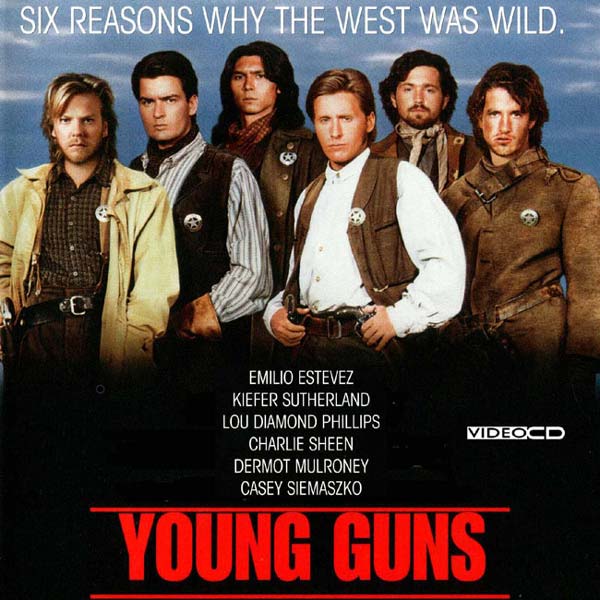
Old Guard vs. Young Guns - Two Ways For Believers To Look At Things Like Biblical Authority, Revelation, And The Church.
Before writing my last post, I told my wife, "I think I'm going to poke a hornet nest and talk about biblical authority again." Lots of people seemed to have read the post, even though Matt and William became the voices for what I think are the two major camps within the Western church. The Old Guard and the Young Guns.
I used to pride myself in my religious angst. At times, it was justified, like when a high school classmate told me, "You know, maybe you're not doing so well in Algebra because of that music you listen to." And other times, I think I wanted to see holes in the church, holes in the Bible, and "elasticity" to Christianity because it allowed me to justify almost anything. What can I say? My argumentative style is persuasion.
Even though I agree more with William's comments, I think I know Matt's point of view. I tried my best to grind an axe with the Bible, "institutional church," and every aspect of Christianity all the while calling myself a Christian and claiming to follow God. In hindsight, I think I was fighting God kind of like Doug in this sketch (not that I think it's a perfect example. Sorry if you think it's a little blue, but I hope you get the idea). I think I wanted my friends outside of the church to think I was savvy like the Young Guns and not judgmental like the musty, dusty, Bible-thumping Old Guard.
I used to say that human writers and translation errors made the Bible untrustworthy as a perfect book.
I used to say that I trusted the guidance of the Holy Spirit more than the Bible.
I used to say that every Christian was a part of the church, so why couldn't I call a group of believers in my living room "church"?
I gave up that kind of thinking when I realized this: I'm an idiot. I have a serious pride issue when I think I'm the wisest dude in the room.
If God wanted to explain Himself and His ways to men in a way they can understand, wouldn't He have some awareness of human folly and short-comings? If God allowed men to insert anything into the scriptures apart from His perfect truth, doesn't that mean the book is (at least in part) deceptive? Do we really think God is limited by human wisdom or even a deceiver?
If I feel like the Holy Spirit is putting something on my heart, but don't have an authority on the true nature of God, how can I know God is talking to me and not something foolish or evil? How could I know if I was feeling the Spirit's direction or just my own human passions?
If a group of people say they believe in Jesus, gather together in one place, and get drunk like those old friends of mine at our "men's Bible study," should I call that a church meeting? Do I grow closer to God, gain wisdom, or learn how to operate in my spiritual gifts?
But that's my story. What do you think? Do you think the Bible is inherently flawed because people wrote it? Can a person discern the direction of the Holy Spirit apart from Biblical understanding? Do we need the church or is it a breeding ground for antiquated, hateful codgers?
I used to pride myself in my religious angst. At times, it was justified, like when a high school classmate told me, "You know, maybe you're not doing so well in Algebra because of that music you listen to." And other times, I think I wanted to see holes in the church, holes in the Bible, and "elasticity" to Christianity because it allowed me to justify almost anything. What can I say? My argumentative style is persuasion.
Even though I agree more with William's comments, I think I know Matt's point of view. I tried my best to grind an axe with the Bible, "institutional church," and every aspect of Christianity all the while calling myself a Christian and claiming to follow God. In hindsight, I think I was fighting God kind of like Doug in this sketch (not that I think it's a perfect example. Sorry if you think it's a little blue, but I hope you get the idea). I think I wanted my friends outside of the church to think I was savvy like the Young Guns and not judgmental like the musty, dusty, Bible-thumping Old Guard.
I used to say that human writers and translation errors made the Bible untrustworthy as a perfect book.
I used to say that I trusted the guidance of the Holy Spirit more than the Bible.
I used to say that every Christian was a part of the church, so why couldn't I call a group of believers in my living room "church"?
I gave up that kind of thinking when I realized this: I'm an idiot. I have a serious pride issue when I think I'm the wisest dude in the room.
If God wanted to explain Himself and His ways to men in a way they can understand, wouldn't He have some awareness of human folly and short-comings? If God allowed men to insert anything into the scriptures apart from His perfect truth, doesn't that mean the book is (at least in part) deceptive? Do we really think God is limited by human wisdom or even a deceiver?
If I feel like the Holy Spirit is putting something on my heart, but don't have an authority on the true nature of God, how can I know God is talking to me and not something foolish or evil? How could I know if I was feeling the Spirit's direction or just my own human passions?
If a group of people say they believe in Jesus, gather together in one place, and get drunk like those old friends of mine at our "men's Bible study," should I call that a church meeting? Do I grow closer to God, gain wisdom, or learn how to operate in my spiritual gifts?
But that's my story. What do you think? Do you think the Bible is inherently flawed because people wrote it? Can a person discern the direction of the Holy Spirit apart from Biblical understanding? Do we need the church or is it a breeding ground for antiquated, hateful codgers?
Sunday, March 20, 2011
The Popular View of Scripture - A look at the Press reader's perspective on the Bible.
I've heard and seen the Bible quoted in a lot of places. Sometimes it's poignant, like the scene in Renaissance Man where one misfit soldier quotes Ecclesiastes and says it's the only writing better than Shakespeare (start it around 7:31). Sometimes it's totally weird and misquoted, like in Ghostbusters. It's in books, television, all over popular culture. In a way, it's meant to make us feel a sense of weight. "You should take this moment seriously, they're referring to the Bible."
Then there are people who have respect for the Bible, but in ways that confuse me. In the past three months, I've had two friends tell me they think the Bible is full of errors, but still a perfect book. One friend went on about "the Deuteronomy hoax" and said it was proof the Bible admits its own faults. Last week, a guy at work went into a passionate discussion about his belief in Creationism but then finished with a lament over all of the books the church conspiratorially kept out of the Bible.
Then, of course, there are those who don't respect the Bible at all. Some think nothing of it. Some even hate it. I typically expect some polarization but every now and again get a disinterested shrug.
Since discovering the Stats tab on Blogger, I was surprised to see the second and third most popular posts are the two essays I wrote on the Bible's authority. It seems like a popular, if not heated, topic. Those of you who read my posts have an idea where I stand, but I want to know where you are on the subject.
Let's see what Press readers have about the authority, inerrancy, and sufficiency of the Bible. What do you think?
Then there are people who have respect for the Bible, but in ways that confuse me. In the past three months, I've had two friends tell me they think the Bible is full of errors, but still a perfect book. One friend went on about "the Deuteronomy hoax" and said it was proof the Bible admits its own faults. Last week, a guy at work went into a passionate discussion about his belief in Creationism but then finished with a lament over all of the books the church conspiratorially kept out of the Bible.
Then, of course, there are those who don't respect the Bible at all. Some think nothing of it. Some even hate it. I typically expect some polarization but every now and again get a disinterested shrug.
Since discovering the Stats tab on Blogger, I was surprised to see the second and third most popular posts are the two essays I wrote on the Bible's authority. It seems like a popular, if not heated, topic. Those of you who read my posts have an idea where I stand, but I want to know where you are on the subject.
Let's see what Press readers have about the authority, inerrancy, and sufficiency of the Bible. What do you think?
Monday, July 26, 2010
Back To Boardgames - Why Christians need the Bible's authority
About a year ago, when I figured out I was probably more of a Calvinist than I ever wanted to admit, I wrote an essay on the Bible's authority. It would probably do for me to include this topic in the Basics Series. Instead of coming up with an entirely new analogy, though, I've decided to revise and repost the original.
My friend Joe has a sick sense of humor. He told me one day to read a particular post and the subsequent comments. This post dealt with a line in 2 Peter 2:7 calling Lot "righteous". Of course, you had the people who talked about justification versus sanctification. Others rejected the passage as "a misunderstanding", because how could God call Lot righteous when he offered his daughters to gang rape, then later got drunk and committed incest with them? Eventually, and Joe intended this, the conversation came to the authority of the Bible, its inerrancy, comparisons of Old to New Testament, and Universalism.
One man created a sub-argument about a supposed misquotation in Mark where the writer "quotes" Isaiah, but actually quotes both Malachi and Isaiah. I wonder if it would do any good to tell him that ancient Greek writing didn't have quotation marks or that they used indirect quotations. For example, if Joe tells me "Dinner is at six tonight. Come over with the guys and join us." I might tell my friends, "Joe wants us to be at his house for dinner at six." Even though I didn't directly quote Joe, I correctly communicated what he said.
For most of my life, people outside of the church have told me the Bible is just a book full of contradictions and inconsistencies. When I was seventeen, I wondered if these people were right. So I read the whole thing, looking for a contradiction or inconsistency. I think my Bible teacher knew what I was doing because he invited me to challenge the Bible's authority and inerrancy openly in class whenever I thought I had found proof. Believe me, I tried. But he always had answers that both cut through my cynicism and satisfied my questions. Soon enough, I began to ask him to explain hard passages because I wanted to know more of how the Bible truly was authoritative and without error. By the end of the school year, I knew without a shred of doubt that the Bible is God's book. To disbelieve or disobey the Bible meant I disbelieved or disobeyed God.
If any of you ever want to take a poke at me the way I did my Bible teacher all of Senior year, please feel free. I'm certain that, given time, I could find a sufficient answer for you. For now, I want to set a foundation for the Bible's authority with a few scriptures. Hebrews 1:1-2 says, "God, after He spoke long ago to the fathers in the prophets in many portions and in many ways, in these last days has spoken to us in His Son, whom He appointed heir of all things, through whom also He made the world." This sums up the Old Testament writings and the words of Jesus. Whatever the prophets said in the Bible, God said through them. That's not to say they themselves were always infallible. Even if Moses thought the world was flat, he never said so in the Bible because God oversaw every word written in scripture and kept it truthful. Going back to 2 Peter, it seems the writer shared Joe's intentions. 2 Peter, 3:1-2 says, "This is now, beloved, the second letter I am writing to you in which I am stirring up your sincere mind by way of reminder, that you should remember the words spoken beforehand by the holy prophets and the commandment of the Lord and Savior spoken by your apostles." This adds the writings of the Apostles into the category of "Authoritative". In the same chapter, Peter equates Paul's writings with scripture and calls those who distort Paul's teachings "untaught and unstable". Paul refers to Luke's and Matthew's gospels as scripture in 1 Timothy 5:18 "The laborer is worthy of his wages."
The whole controversy over Biblical authority and inerrancy reminds me of board game tantrums. You know what I'm talking about. We've all played Monopoly and accused the banker of cheating before flipping the whole board into the air. My favorite checkmate in chess was the one where I swept all the pieces to the floor with my spindly arm. I get the same feeling every time I hear arguments for or against the ultimate authority of anything.
While studying Wayne Grudem's Systematic Theology, I read, "It is one thing to affirm that the Bible claims to be the words of God. It is another thing to be convinced that those claims are true. Our ultimate conviction that the words of the Bible are God's words comes only when the Holy Spirit speaks in and through the words of the Bible to our hearts and gives us an inner assurance that these are the words of our Creator speaking to us." Then he quotes 1 Corinthians 2:14, "The natural man does not receive the things of the Spirit of God, for they are folly to him, and he is not able to understand them because they are spiritually discerned (Grudem's translation)."
Essentially, what Grudem said was this, "If you don't believe the Bible, it's because God hasn't revealed it as truth to you." And think of this, if we claim that the Bible is our absolute standard of truth, then we can't appeal to another kind of standard to validate it. To do so would put the outside standard on par or greater than scripture. So what difference is there between us saying the Bible is true because it claims to be true and the claims of ultimate authority for an Atheist who supremely values science or historical accuracy? They think science is authoritative because it's scientifically proven. They think history is accurate because of the accuracy of historical documents. If you think about it long enough, you want to kick the game table, knock over the pieces, and shout, "No, I'm Sorry!"
The difference I can see comes from what I said long ago about Xerox copies. We are not ultimate beings. We're limited. Blaise Pascal had this realization and said that man was merely a point on a line. We can't comprehend the extremes of anything in nature, and yet those extremes exist beyond our comprehension. From there, he explains that a being must comprehend those extremes and only God is ultimate enough to do so.
So where else but the Bible could I find a standard of truth? I can't base my standard of truth at all on myself. My perception, my logic, my experience, it's all limited. And I can't base my standard on other men because I recognize their limitations as well. The Bible, with the Holy Spirit's instruction, convinces me of its own truth. I believe its truth to such lengths that I allow the words of the Bible to offend my reason and change the way I think.
Some people might think that I worship the Bible rather than God when I say these things. Let me assure you I do not. God reveals Himself to man through the Bible. God also says that He reveals Himself to man through nature. In fact He reveals Himself to us in all things. But God doesn't want us to worship nature or any other means of revelation. There can be no other gods before Him, not even His book. My point is that the Bible is a complete, though not exhaustive, way in which God revealed Himself.
Cornelius Van Til said that in order for us to truly know God, He would have to reveal Himself truly to us. If the Bible were not the absolute, authoritative, perfect standard of truth, then my understanding of God would be incomplete. No one could truly know God. If the Bible contained any falsehood, the pluralist claim of all religions worshiping the same god might have some merit. God would be subjective to our perception. So if you claim to be a Christian, you absolutely must recognize the authority of the Bible.
Have you thrown the game table yet? I know I've seen and thrown enough board game tantrums to wonder if I should even bother playing in the first place. But it wouldn't do any good if I surrendered by saying, "It's a Christian thing, you wouldn't understand," or, "Just take a leap of faith," or, "We don't ask those questions." The Bible I claim to believe makes it clear I should still work to understand my faith and reason with people. But 1 Corinthians 2:14, as well as other verses, tell me I don't need to convince anyone. I can leave that up to the Holy Spirit and find comfort in knowing He'll do a much better job.
My friend Joe has a sick sense of humor. He told me one day to read a particular post and the subsequent comments. This post dealt with a line in 2 Peter 2:7 calling Lot "righteous". Of course, you had the people who talked about justification versus sanctification. Others rejected the passage as "a misunderstanding", because how could God call Lot righteous when he offered his daughters to gang rape, then later got drunk and committed incest with them? Eventually, and Joe intended this, the conversation came to the authority of the Bible, its inerrancy, comparisons of Old to New Testament, and Universalism.
One man created a sub-argument about a supposed misquotation in Mark where the writer "quotes" Isaiah, but actually quotes both Malachi and Isaiah. I wonder if it would do any good to tell him that ancient Greek writing didn't have quotation marks or that they used indirect quotations. For example, if Joe tells me "Dinner is at six tonight. Come over with the guys and join us." I might tell my friends, "Joe wants us to be at his house for dinner at six." Even though I didn't directly quote Joe, I correctly communicated what he said.
For most of my life, people outside of the church have told me the Bible is just a book full of contradictions and inconsistencies. When I was seventeen, I wondered if these people were right. So I read the whole thing, looking for a contradiction or inconsistency. I think my Bible teacher knew what I was doing because he invited me to challenge the Bible's authority and inerrancy openly in class whenever I thought I had found proof. Believe me, I tried. But he always had answers that both cut through my cynicism and satisfied my questions. Soon enough, I began to ask him to explain hard passages because I wanted to know more of how the Bible truly was authoritative and without error. By the end of the school year, I knew without a shred of doubt that the Bible is God's book. To disbelieve or disobey the Bible meant I disbelieved or disobeyed God.
If any of you ever want to take a poke at me the way I did my Bible teacher all of Senior year, please feel free. I'm certain that, given time, I could find a sufficient answer for you. For now, I want to set a foundation for the Bible's authority with a few scriptures. Hebrews 1:1-2 says, "God, after He spoke long ago to the fathers in the prophets in many portions and in many ways, in these last days has spoken to us in His Son, whom He appointed heir of all things, through whom also He made the world." This sums up the Old Testament writings and the words of Jesus. Whatever the prophets said in the Bible, God said through them. That's not to say they themselves were always infallible. Even if Moses thought the world was flat, he never said so in the Bible because God oversaw every word written in scripture and kept it truthful. Going back to 2 Peter, it seems the writer shared Joe's intentions. 2 Peter, 3:1-2 says, "This is now, beloved, the second letter I am writing to you in which I am stirring up your sincere mind by way of reminder, that you should remember the words spoken beforehand by the holy prophets and the commandment of the Lord and Savior spoken by your apostles." This adds the writings of the Apostles into the category of "Authoritative". In the same chapter, Peter equates Paul's writings with scripture and calls those who distort Paul's teachings "untaught and unstable". Paul refers to Luke's and Matthew's gospels as scripture in 1 Timothy 5:18 "The laborer is worthy of his wages."
The whole controversy over Biblical authority and inerrancy reminds me of board game tantrums. You know what I'm talking about. We've all played Monopoly and accused the banker of cheating before flipping the whole board into the air. My favorite checkmate in chess was the one where I swept all the pieces to the floor with my spindly arm. I get the same feeling every time I hear arguments for or against the ultimate authority of anything.
While studying Wayne Grudem's Systematic Theology, I read, "It is one thing to affirm that the Bible claims to be the words of God. It is another thing to be convinced that those claims are true. Our ultimate conviction that the words of the Bible are God's words comes only when the Holy Spirit speaks in and through the words of the Bible to our hearts and gives us an inner assurance that these are the words of our Creator speaking to us." Then he quotes 1 Corinthians 2:14, "The natural man does not receive the things of the Spirit of God, for they are folly to him, and he is not able to understand them because they are spiritually discerned (Grudem's translation)."
Essentially, what Grudem said was this, "If you don't believe the Bible, it's because God hasn't revealed it as truth to you." And think of this, if we claim that the Bible is our absolute standard of truth, then we can't appeal to another kind of standard to validate it. To do so would put the outside standard on par or greater than scripture. So what difference is there between us saying the Bible is true because it claims to be true and the claims of ultimate authority for an Atheist who supremely values science or historical accuracy? They think science is authoritative because it's scientifically proven. They think history is accurate because of the accuracy of historical documents. If you think about it long enough, you want to kick the game table, knock over the pieces, and shout, "No, I'm Sorry!"
The difference I can see comes from what I said long ago about Xerox copies. We are not ultimate beings. We're limited. Blaise Pascal had this realization and said that man was merely a point on a line. We can't comprehend the extremes of anything in nature, and yet those extremes exist beyond our comprehension. From there, he explains that a being must comprehend those extremes and only God is ultimate enough to do so.
So where else but the Bible could I find a standard of truth? I can't base my standard of truth at all on myself. My perception, my logic, my experience, it's all limited. And I can't base my standard on other men because I recognize their limitations as well. The Bible, with the Holy Spirit's instruction, convinces me of its own truth. I believe its truth to such lengths that I allow the words of the Bible to offend my reason and change the way I think.
Some people might think that I worship the Bible rather than God when I say these things. Let me assure you I do not. God reveals Himself to man through the Bible. God also says that He reveals Himself to man through nature. In fact He reveals Himself to us in all things. But God doesn't want us to worship nature or any other means of revelation. There can be no other gods before Him, not even His book. My point is that the Bible is a complete, though not exhaustive, way in which God revealed Himself.
Cornelius Van Til said that in order for us to truly know God, He would have to reveal Himself truly to us. If the Bible were not the absolute, authoritative, perfect standard of truth, then my understanding of God would be incomplete. No one could truly know God. If the Bible contained any falsehood, the pluralist claim of all religions worshiping the same god might have some merit. God would be subjective to our perception. So if you claim to be a Christian, you absolutely must recognize the authority of the Bible.
Have you thrown the game table yet? I know I've seen and thrown enough board game tantrums to wonder if I should even bother playing in the first place. But it wouldn't do any good if I surrendered by saying, "It's a Christian thing, you wouldn't understand," or, "Just take a leap of faith," or, "We don't ask those questions." The Bible I claim to believe makes it clear I should still work to understand my faith and reason with people. But 1 Corinthians 2:14, as well as other verses, tell me I don't need to convince anyone. I can leave that up to the Holy Spirit and find comfort in knowing He'll do a much better job.
Monday, April 27, 2009
A Question Of the Bible's Authority - Or, board game tantrums
My friend Joe has a sick sense of humor sometimes. He told me one day to read a particular post and the subsequent comments. This post dealt with a line in 2 Peter 2:7 calling Lot “righteous”. Of course, you had the people who talked about Justification versus Sanctification. Others rejected this passage as “a misunderstanding”, because how could God call Lot righteous when he offered his daughters to gang rape, and so on? Eventually, and Joe intended this, the conversation came to the authority of the Bible, its inerrancy, Old Testament versus New Testament, and Universalism.
One argument was about a supposed misquotation in Mark where the writer “quotes” Isaiah, but actually quotes both Malachi and Isaiah. I wonder if it would do any good to tell him that ancient Greek writing didn’t have quotation marks or that they used indirect quotations (for example, If Joe tells me “Dinner is at six tonight. Come over and join us”, I might tell my roommates, “Joe told me to be at his house for dinner at six”. Even though I didn’t directly quote Joe, I correctly communicated what he said).
I don’t plan on writing my whole argument for why the Bible is completely accurate and true right now. I will, however, point out a few scriptures for you to think about in the meantime. Hebrews 1:1-2 says, “God, after He spoke long ago to the fathers in the prophets in many portions and in many ways, in these last days has spoken to us in His Son, whom He appointed heir of all things, through whom also He made the world.” This sums up the Old Testament writings and the words of Jesus. Going back to 2 Peter, it seems the writer shared Joe’s intentions. 2 Peter 3:1-2 says, “This is now, beloved, the second letter I am writing to you in which I am stirring up your sincere mind by way of reminder, that you should remember the words spoken beforehand by the holy prophets and the commandment of the Lord and Savior spoken by your apostles.” This adds in the other writings of the Apostles. In the same chapter, Peter equates Paul’s writings with scripture. And he calls those who distort Paul’s teachings “untaught and unstable”.
But like I said, I don’t want to get into all that stuff right now. I want to talk about board game tantrums. You know what I’m talking about. We’ve all played Monopoly and accused the banker of cheating before flipping the whole board into the air. My favorite checkmate in chess was the one where I swept all the pieces to the floor with my spindly forearm. I get the same feeling every time I hear arguments for or against the ultimate authority of anything. Like the Nada Surf song says, “I talk to missionaries when they’re standing at my door. They tell me what I should be reading. I still can’t see what for. We both stand there politely trying to change each other’s core.” Only it’s not always polite.
While studying Wayne Grudem’s Systematic Theology, I read, “It is one thing to affirm that the Bible claims to be the words of God. It is another thing to be convinced that those claims are true. Our ultimate conviction that the words of the Bible are God’s words comes only when the Holy Spirit speaks in and through the words of the Bible to our hearts and gives us an inner assurance that these are the words of our Creator speaking to us.” Then he quotes 1 Corinthians 2:14. “The natural man does not receive the things of the Spirit of God, for they are folly to him, and he is not able to understand them because they are spiritually discerned (Grudem’s translation).”
Essentially, what Grudem said was this, “If you don’t believe the Bible, it’s because God hasn’t revealed it as truth to you.” And think of this, if we claim that the Bible is our absolute standard of truth, then we can’t appeal to another kind of standard to validate it. To do so would put the outside standard on par or greater than scripture. So what difference is there between us saying the Bible is true because it claims to be true and the claims of ultimate authority for an atheist or universalist? If you think about it long enough, you want to kick the game table, knock over the pieces, and shout, “no, I’m sorry!”
The difference I can see comes from what I said about Xerox copies. We are not ultimate beings. We’re limited. Blaise Pascal had this realization and said that man was merely a point on a line. We can’t comprehend the extremes of anything in nature, and yet those extremes exist beyond our comprehension. From there, he explains that a being must comprehend those extremes, and only God is ultimate enough to do so.
I can’t base my standard on truth at all on myself. My perception, my logic, my experience, it’s all limited. And I can’t base my standard on other men because I recognize their limitations as well. I must have an absolute standard of truth outside of myself. The Bible, with the Holy Spirit’s instruction, convinces me of its own truth. I recognize its truth to such lengths that I allow the words of the Bible to offend my reason and change the way I think.
Some people might think that I worship the Bible rather than God when I say these things. Let me assure you that I do not. God reveals Himself to man through the Bible. God also says that He reveals Himself to man through nature. In fact, He reveals Himself to us in all things. But God doesn’t want us to worship nature or any other means of revelation. There can be no other gods before Him, not even His book. My point is that the Bible is a complete, but not exhaustive, way in which God revealed Himself.
Cornelius Van Til said that in order for us to truly know God, He would have to reveal Himself truly to us. If the Bible were not the authoritative, perfect, ultimate standard of truth, then my understanding of God would be incomplete. No one could truly know God. If the Bible weren’t perfectly true, the universalist claim of all religions worshipping the same god might have some merit. God would be subjective to our perception. So if you claim to be a Christian, you absolutely must recognize the authority of the Bible.
Have you thrown the game table yet? I know I’ve seen and thrown enough board game tantrums to wonder if I should even bother playing in the first place. But it wouldn’t do any good if I surrendered by saying, “It’s a Christian thing, you wouldn’t understand.” The Bible I claim to absolutely believe makes it clear that I should still try to reason with people. And 1 Corinthians 2:14, as well as other verses, tell me I don’t need to convince anyone. I can leave that up to the Holy Spirit and find comfort in knowing He’ll do a much better job.
One argument was about a supposed misquotation in Mark where the writer “quotes” Isaiah, but actually quotes both Malachi and Isaiah. I wonder if it would do any good to tell him that ancient Greek writing didn’t have quotation marks or that they used indirect quotations (for example, If Joe tells me “Dinner is at six tonight. Come over and join us”, I might tell my roommates, “Joe told me to be at his house for dinner at six”. Even though I didn’t directly quote Joe, I correctly communicated what he said).
I don’t plan on writing my whole argument for why the Bible is completely accurate and true right now. I will, however, point out a few scriptures for you to think about in the meantime. Hebrews 1:1-2 says, “God, after He spoke long ago to the fathers in the prophets in many portions and in many ways, in these last days has spoken to us in His Son, whom He appointed heir of all things, through whom also He made the world.” This sums up the Old Testament writings and the words of Jesus. Going back to 2 Peter, it seems the writer shared Joe’s intentions. 2 Peter 3:1-2 says, “This is now, beloved, the second letter I am writing to you in which I am stirring up your sincere mind by way of reminder, that you should remember the words spoken beforehand by the holy prophets and the commandment of the Lord and Savior spoken by your apostles.” This adds in the other writings of the Apostles. In the same chapter, Peter equates Paul’s writings with scripture. And he calls those who distort Paul’s teachings “untaught and unstable”.
But like I said, I don’t want to get into all that stuff right now. I want to talk about board game tantrums. You know what I’m talking about. We’ve all played Monopoly and accused the banker of cheating before flipping the whole board into the air. My favorite checkmate in chess was the one where I swept all the pieces to the floor with my spindly forearm. I get the same feeling every time I hear arguments for or against the ultimate authority of anything. Like the Nada Surf song says, “I talk to missionaries when they’re standing at my door. They tell me what I should be reading. I still can’t see what for. We both stand there politely trying to change each other’s core.” Only it’s not always polite.
While studying Wayne Grudem’s Systematic Theology, I read, “It is one thing to affirm that the Bible claims to be the words of God. It is another thing to be convinced that those claims are true. Our ultimate conviction that the words of the Bible are God’s words comes only when the Holy Spirit speaks in and through the words of the Bible to our hearts and gives us an inner assurance that these are the words of our Creator speaking to us.” Then he quotes 1 Corinthians 2:14. “The natural man does not receive the things of the Spirit of God, for they are folly to him, and he is not able to understand them because they are spiritually discerned (Grudem’s translation).”
Essentially, what Grudem said was this, “If you don’t believe the Bible, it’s because God hasn’t revealed it as truth to you.” And think of this, if we claim that the Bible is our absolute standard of truth, then we can’t appeal to another kind of standard to validate it. To do so would put the outside standard on par or greater than scripture. So what difference is there between us saying the Bible is true because it claims to be true and the claims of ultimate authority for an atheist or universalist? If you think about it long enough, you want to kick the game table, knock over the pieces, and shout, “no, I’m sorry!”
The difference I can see comes from what I said about Xerox copies. We are not ultimate beings. We’re limited. Blaise Pascal had this realization and said that man was merely a point on a line. We can’t comprehend the extremes of anything in nature, and yet those extremes exist beyond our comprehension. From there, he explains that a being must comprehend those extremes, and only God is ultimate enough to do so.
I can’t base my standard on truth at all on myself. My perception, my logic, my experience, it’s all limited. And I can’t base my standard on other men because I recognize their limitations as well. I must have an absolute standard of truth outside of myself. The Bible, with the Holy Spirit’s instruction, convinces me of its own truth. I recognize its truth to such lengths that I allow the words of the Bible to offend my reason and change the way I think.
Some people might think that I worship the Bible rather than God when I say these things. Let me assure you that I do not. God reveals Himself to man through the Bible. God also says that He reveals Himself to man through nature. In fact, He reveals Himself to us in all things. But God doesn’t want us to worship nature or any other means of revelation. There can be no other gods before Him, not even His book. My point is that the Bible is a complete, but not exhaustive, way in which God revealed Himself.
Cornelius Van Til said that in order for us to truly know God, He would have to reveal Himself truly to us. If the Bible were not the authoritative, perfect, ultimate standard of truth, then my understanding of God would be incomplete. No one could truly know God. If the Bible weren’t perfectly true, the universalist claim of all religions worshipping the same god might have some merit. God would be subjective to our perception. So if you claim to be a Christian, you absolutely must recognize the authority of the Bible.
Have you thrown the game table yet? I know I’ve seen and thrown enough board game tantrums to wonder if I should even bother playing in the first place. But it wouldn’t do any good if I surrendered by saying, “It’s a Christian thing, you wouldn’t understand.” The Bible I claim to absolutely believe makes it clear that I should still try to reason with people. And 1 Corinthians 2:14, as well as other verses, tell me I don’t need to convince anyone. I can leave that up to the Holy Spirit and find comfort in knowing He’ll do a much better job.
Thursday, November 6, 2008
The Reason Why We Shouldn’t Fear Anything.
Now that baseball season is over, I don’t have any good reason to watch television. I can see Heroes online, you know? And that’s a better deal because I don’t have to endure so many commercials when I watch television shows online. Advertisements, more than many things, bother the hell out of me. During the World Series, though, I saw a Wendy’s commercial that annoyingly fits well with what I want to tell all of you today. The ad has two well-cast “everymen” sitting at work. One guy has a Wendy’s bag and asks the other guy how he liked his chicken sandwich. The second dude says, “I don’t remember.” Then the girl on the Wendy’s bag starts giving him a hard time about eating boring food.
This commercial is relevant to my point because memory sometimes fails more than serves us. I remember learning about “Mass Amnesia” from… somebody, I can’t remember. It’s a phenomenon that causes us to forget things like the outrage over gas prices crossing the dollar fifty mark, why we thought that Macarena song was so good, or how my teacher in elementary school convinced an entire fourth grade class that overpopulation would strangle the earth by the time we were twenty-five years old. Which is now. I hate this about my brain because sometimes I forget the most important of truths. The Kingdom of God is at hand. Jesus is Lord. I can put my trust in Him. My ears will hear, my own mouth will say words that evaporate into the air, and then I’ll forget to live in the confidence of these truths.
I can’t begin to tell you how many times I’ve said that the Bible is absolutely true, infallibly true, the standard of truth. But then I go through my days with a low level of anxiety hanging out in my chest and giving me headaches. Why am I stressed? Why am I worried about anything? Why am I ever afraid?
Just before Jesus ascended into Heaven, his disciples came around him. Matthew 28:17 says, “When they saw Him, they worshiped Him; but some were doubtful.” My paraphrase would read, They hung out with the Messiah, whom had so recently died a brutal death; but some suffered from mass amnesia and wondered if He really was the Son of God. It makes me wonder how easy it could have been for some of them to forget what Jesus said in the very next verse, “All authority has been given to Me in heaven and on earth.”
I love the wording of Revelation 4:2, “Immediately I was in the Spirit; and behold, a throne was standing in heaven, and One sitting on the throne.” One. Only One sits on the throne. God alone rules everything, and everything is subject to His rule. He loves us and He has it under control. This is the reason why we shouldn’t fear anything.
This post almost had the title, or at least the subtitle, “The Only Reason We Should Ever Fear Anything.” I decided to accentuate the positive. But really, that old question still demands an answer. Why am I ever afraid? It’s because in my heart, I’ve put other things on the throne. I sometimes worry about having the money to pay bills, so I put success and financial responsibility on the throne. My thirties will be here before I know it, and I sometimes think if I’m not married and having babies before then, I’m going to be miserable. I’ve put relationships and family on the throne. Certain family members have at times expressed concern over me wasting my talent. I sometimes listen to them. When I do, I’ve put my abilities on the throne. So many things have sat on the throne in my heart that didn’t deserve the seat. That’s God’s chair. When we put our trust in something or someone else to save us, preserve us, make us happy, or give us hope, then it has become an idol. Only then should we fear because deep inside of us, intricately woven into our souls, is the understanding that our idols can and will fail us.
If I genuinely put my trust in Jesus, then I also trust in His authority, His victory. Jesus has been and always will be mankind’s only hope. He alone can guarantee security through His salvation. Everything else, including good things like achievements or relationships or success, falls short of our security in Jesus. Sometimes these things assert themselves as having power over us, but any power they have first came from God. Remember the conversation between Jesus and Pilate in John 19:10-11? Pilate was offended that Jesus wouldn’t answer a question, so he said, “‘You do not speak to me? Do You not know that I have authority to release You, and I have authority to crucify You?’ Jesus answered, ‘You would have no authority over Me, unless it had been given you from above.’”
Now that’s fearlessness. Jesus just had the shit beat out of Him, and there He is, toe to toe with the governing ruler, telling him that he has no say in whether He lives or dies. It’s a beautiful, albeit gruesome, picture of how we should deal with fears. God is in control. He’s on the throne. Whatever happens, I know this is true. I’ll just have to try not to forget it.
This commercial is relevant to my point because memory sometimes fails more than serves us. I remember learning about “Mass Amnesia” from… somebody, I can’t remember. It’s a phenomenon that causes us to forget things like the outrage over gas prices crossing the dollar fifty mark, why we thought that Macarena song was so good, or how my teacher in elementary school convinced an entire fourth grade class that overpopulation would strangle the earth by the time we were twenty-five years old. Which is now. I hate this about my brain because sometimes I forget the most important of truths. The Kingdom of God is at hand. Jesus is Lord. I can put my trust in Him. My ears will hear, my own mouth will say words that evaporate into the air, and then I’ll forget to live in the confidence of these truths.
I can’t begin to tell you how many times I’ve said that the Bible is absolutely true, infallibly true, the standard of truth. But then I go through my days with a low level of anxiety hanging out in my chest and giving me headaches. Why am I stressed? Why am I worried about anything? Why am I ever afraid?
Just before Jesus ascended into Heaven, his disciples came around him. Matthew 28:17 says, “When they saw Him, they worshiped Him; but some were doubtful.” My paraphrase would read, They hung out with the Messiah, whom had so recently died a brutal death; but some suffered from mass amnesia and wondered if He really was the Son of God. It makes me wonder how easy it could have been for some of them to forget what Jesus said in the very next verse, “All authority has been given to Me in heaven and on earth.”
I love the wording of Revelation 4:2, “Immediately I was in the Spirit; and behold, a throne was standing in heaven, and One sitting on the throne.” One. Only One sits on the throne. God alone rules everything, and everything is subject to His rule. He loves us and He has it under control. This is the reason why we shouldn’t fear anything.
This post almost had the title, or at least the subtitle, “The Only Reason We Should Ever Fear Anything.” I decided to accentuate the positive. But really, that old question still demands an answer. Why am I ever afraid? It’s because in my heart, I’ve put other things on the throne. I sometimes worry about having the money to pay bills, so I put success and financial responsibility on the throne. My thirties will be here before I know it, and I sometimes think if I’m not married and having babies before then, I’m going to be miserable. I’ve put relationships and family on the throne. Certain family members have at times expressed concern over me wasting my talent. I sometimes listen to them. When I do, I’ve put my abilities on the throne. So many things have sat on the throne in my heart that didn’t deserve the seat. That’s God’s chair. When we put our trust in something or someone else to save us, preserve us, make us happy, or give us hope, then it has become an idol. Only then should we fear because deep inside of us, intricately woven into our souls, is the understanding that our idols can and will fail us.
If I genuinely put my trust in Jesus, then I also trust in His authority, His victory. Jesus has been and always will be mankind’s only hope. He alone can guarantee security through His salvation. Everything else, including good things like achievements or relationships or success, falls short of our security in Jesus. Sometimes these things assert themselves as having power over us, but any power they have first came from God. Remember the conversation between Jesus and Pilate in John 19:10-11? Pilate was offended that Jesus wouldn’t answer a question, so he said, “‘You do not speak to me? Do You not know that I have authority to release You, and I have authority to crucify You?’ Jesus answered, ‘You would have no authority over Me, unless it had been given you from above.’”
Now that’s fearlessness. Jesus just had the shit beat out of Him, and there He is, toe to toe with the governing ruler, telling him that he has no say in whether He lives or dies. It’s a beautiful, albeit gruesome, picture of how we should deal with fears. God is in control. He’s on the throne. Whatever happens, I know this is true. I’ll just have to try not to forget it.
Subscribe to:
Posts (Atom)